

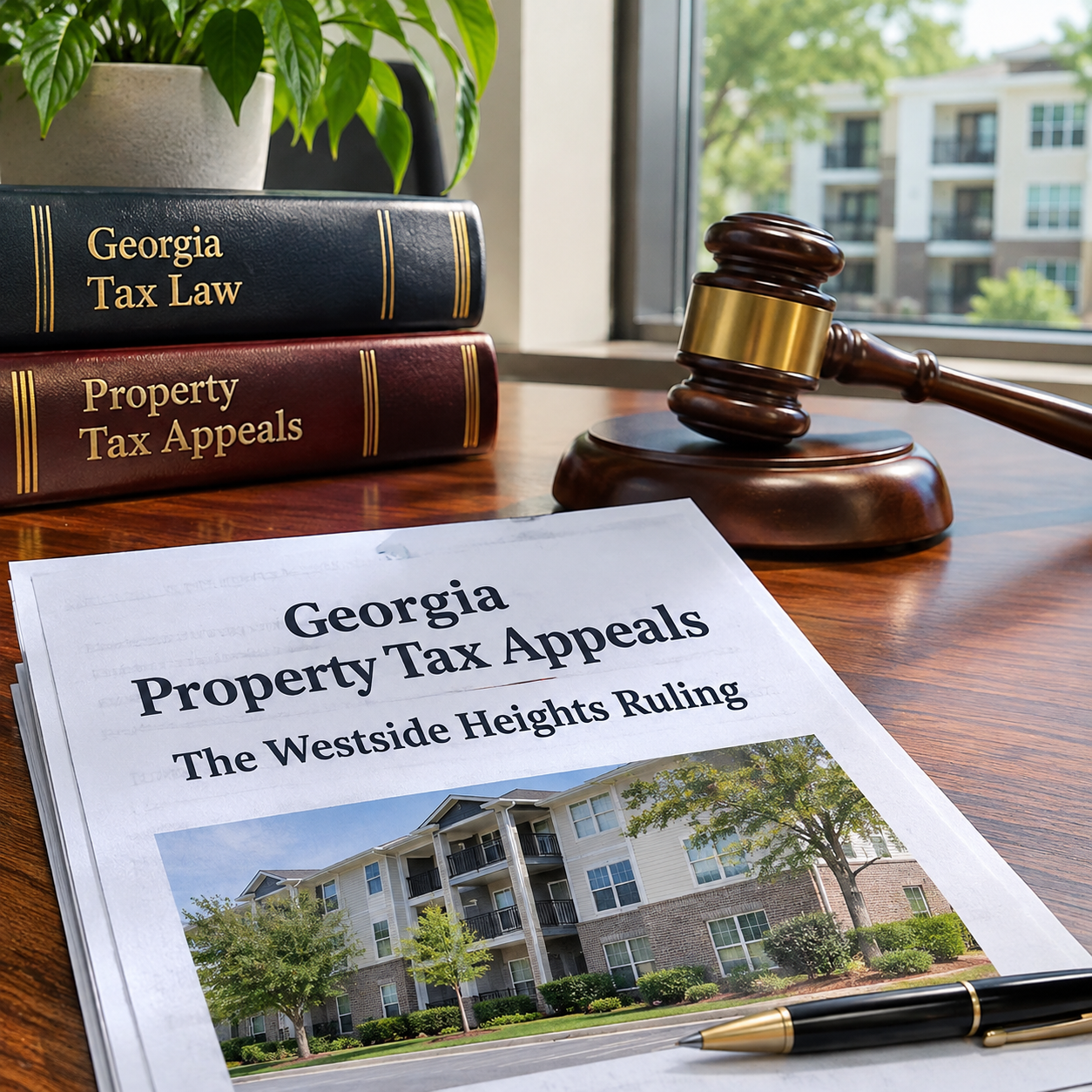
A new property tax assessment notice may arrive even after you’ve settled an appeal. If a court-approved settlement already sets the value for the year on that notice, can you appeal for a lower value anyway?
In Westside Heights Acquisition, LLC v. Fulton County Board of Tax Assessors, the Georgia Court of Appeals held that the owner could not relitigate a value it had already agreed to for that same tax year. The November 2, 2026 decision is a reminder for Georgia apartment owners and other commercial property owners to read the settlement and the new notice together before deciding how to respond.
What happened in Westside Heights?
The owner of an Atlanta apartment complex appealed its 2022 property tax assessment. The parties settled, and the superior court entered a consent judgment setting separate property values for 2022, 2023 and 2024.
The next day, Fulton County issued a 2023 assessment notice showing a higher value than the one in the judgment. The owner appealed. A hearing officer reduced the assessment to $72 million, below even the agreed 2023 value. The owner then appealed to superior court seeking a further reduction, and the county moved to enforce the earlier judgment.
The Court of Appeals sided with the county. It applied collateral estoppel, which prevents parties from relitigating an issue already decided between them. The consent judgment expressly fixed the property’s 2023 value. The higher notice and the county’s participation in the later hearing did not establish that the county had given up its right to enforce that judgment. Read the court’s opinion, Case No. A26A1550: https://law.justia.com/cases/georgia/court-of-appeals/2026/a26a1550.html
What Georgia property owners should do
Before settling, check every year the agreement covers. Identify each parcel, tax year and agreed value in both the settlement and the proposed order. If you expect a material change, such as a renovation or a new affordability restriction, decide before signing whether the settlement should leave a later year open or expressly address that event.
If a new notice conflicts with the judgment, calendar the deadline immediately. Compare the notice with the signed order and check whether the county has applied the agreed value to the tax records and bill. Then determine whether to seek a correction, enforce the judgment or take a step to preserve appeal rights. Do not assume that asking the county to correct the notice extends the appeal deadline.
Distinguish an agreed future-year value from Georgia’s statutory assessment freeze. This case turned on a consent judgment that expressly resolved the disputed year. It did not decide how Georgia’s statutory freeze applies in other cases or change how affordable housing or low-income housing tax credits are valued.
If you’ve received a Georgia assessment notice that conflicts with a prior settlement, Lovett Property Tax Advisors can help you compare the notice, the agreement and the tax bill before you decide how to proceed.